Sehatum journal
Knee pain on walks or stairs: what should you notice?
The pain may show up halfway up the stairs, on the walk to work or when standing from a chair. Rather than guessing that the joint is simply ‘worn out’, notice which movement brings it on, whether there was an injury and what you can still do comfortably.
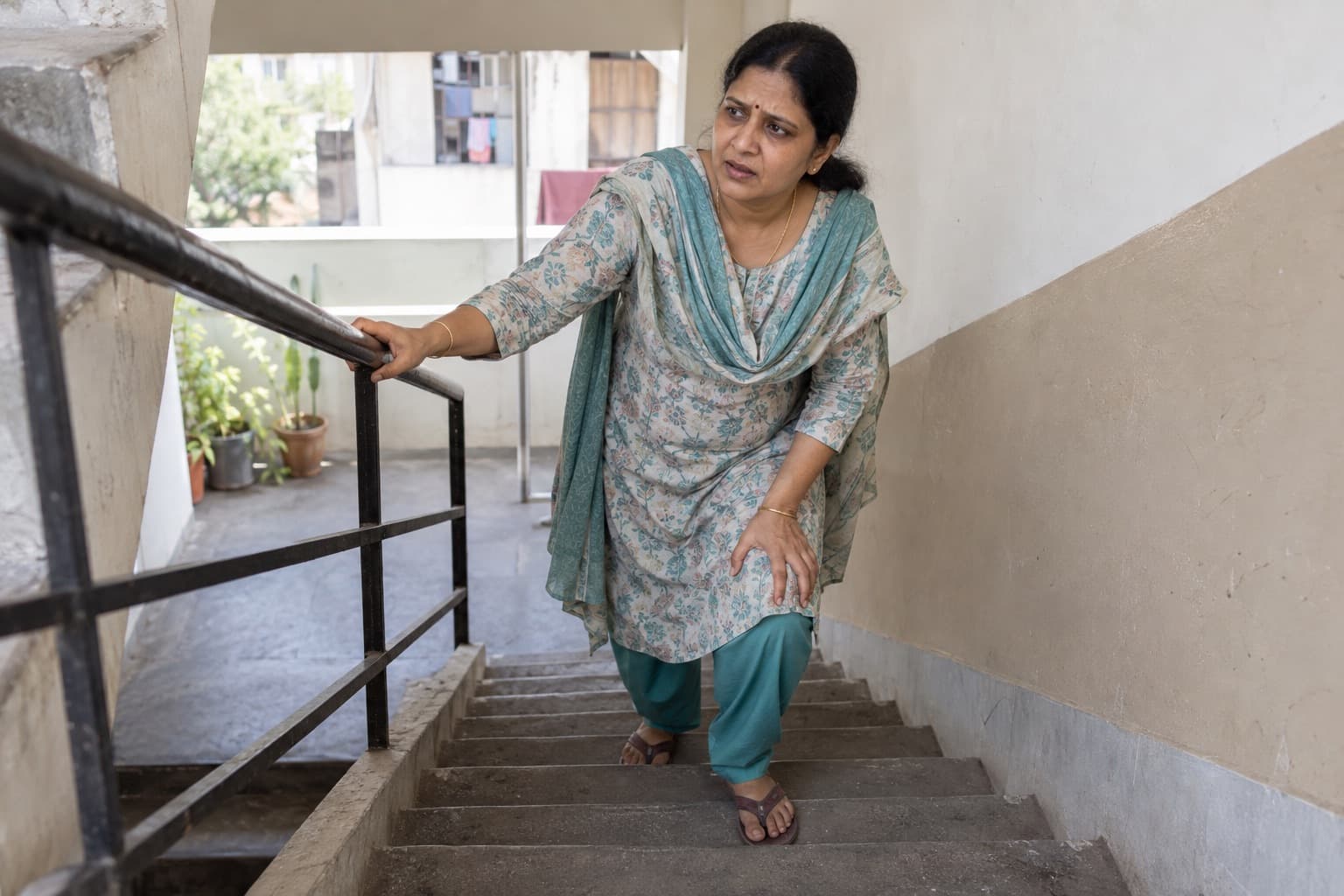
Describe the movement that brings on pain
Write down where the pain is, whether it affects one knee or both, and when it began. Did you twist or fall, or did it appear gradually? Is going up stairs different from coming down, walking on level ground or standing from a low seat? These everyday details tell a clinician more than a single pain score.
Note swelling, warmth, stiffness after rest and whether you can fully bend and straighten the knee. Osteoarthritis can cause pain with joint use and short-lived stiffness after rest, but knee pain has many possible causes. The pattern alone cannot diagnose arthritis or tell whether an X-ray is needed.
Keep a record of what you can do
For several days, note how far you can walk, whether you need a handrail and whether pain changes after a break. If you work on your feet, record which part of the shift is most difficult. This makes it easier to explain the effect on daily life and to notice whether the knee is improving or limiting more tasks.
For a new mild episode, the NHS suggests reducing weight on the painful knee and using a cold pack wrapped in a cloth for short periods. Avoid forcing a painful movement. If pain persists, a clinician or physiotherapist can help you plan appropriate activity. Long-term knee conditions may benefit from regular exercise, but the right plan depends on the cause and your current ability.
Do not wait on warning signs
Seek prompt medical advice if the knee is very painful, you cannot move it or bear weight, it is badly swollen or has changed shape, or it locks, gives way or clicks painfully. A hot or red knee with fever or feeling shivery also needs urgent assessment. These signs should not be explained away as ordinary strain or age.
If pain does not improve over a few weeks, arrange a routine assessment and bring your notes. Our six-question knee guide can organise the story before a non-urgent visit, but it cannot examine the joint or determine the cause. With an urgent sign, seek local medical care instead of finishing a guide.
Explore your next step
Explore the knee-pain guide →Sources: NHS — Knee pain · NIAMS — Osteoarthritis: symptoms and causes · NHS — Osteoarthritis