Sehatum journal
More hair than usual in your comb? What to notice first
A comb full of hair can be upsetting, but it does not tell you the cause. Start with what has changed for you: where the hair is coming from, when you first noticed it and whether your scalp feels different.
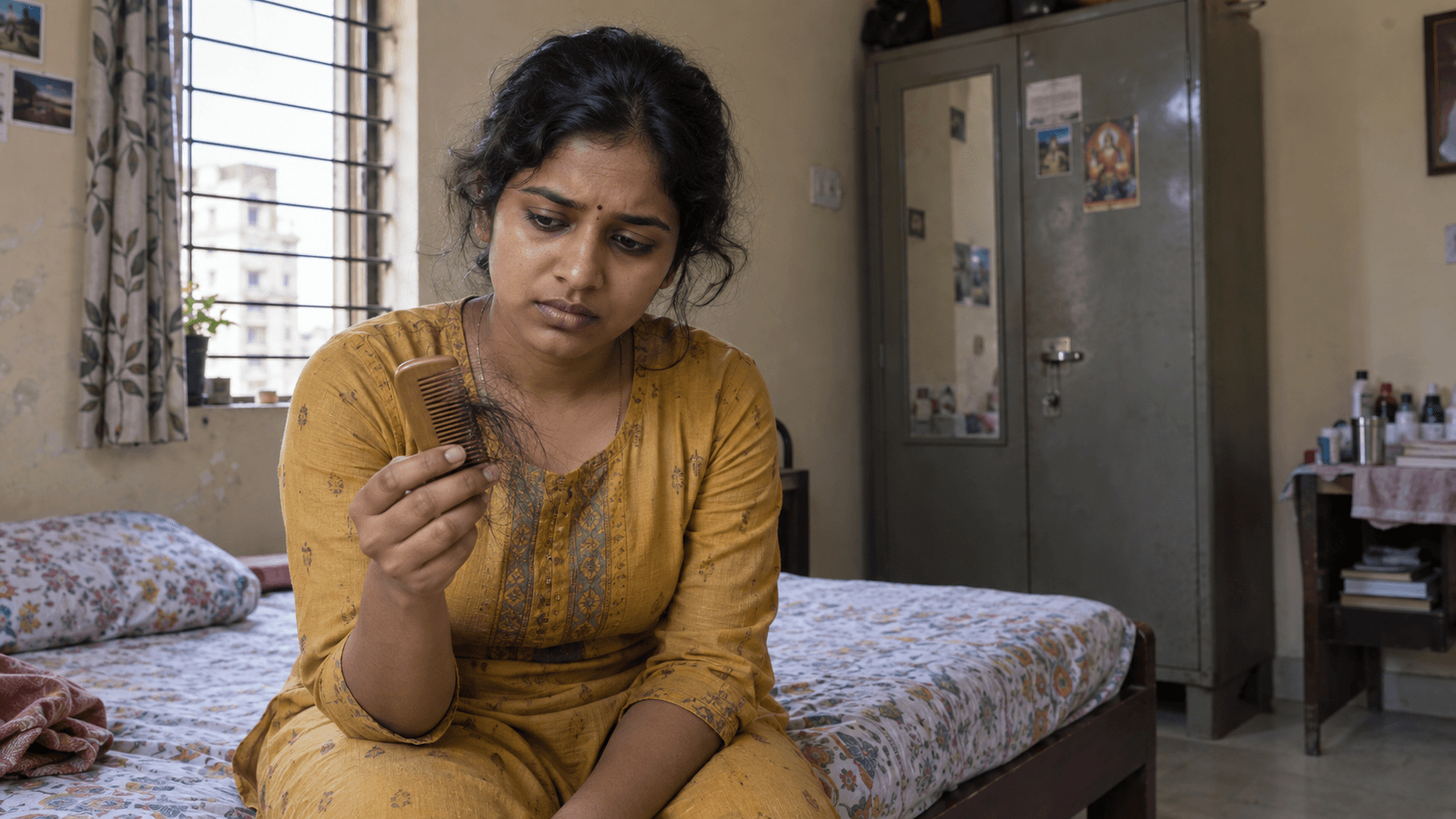
Look for a pattern, not a daily hair count
Some shedding is part of normal hair growth. The NHS and American Academy of Dermatology describe roughly 50 to 100 shed hairs a day as common, but counting each strand is rarely useful. Compare with your usual pattern instead. Are you seeing more loose hairs after washing or combing, gradual thinning at the hairline or parting, or a distinct bare patch?
Check whether the change is across the whole scalp or in one place. Note any itching, redness, scale, pain or broken hairs. These details can help a clinician distinguish shedding from other forms of hair loss; a mirror or a photo taken in similar light every few weeks may be more useful than judging one day’s comb.
Think back a few months
The AAD notes that heavier shedding can follow childbirth, high fever, an operation, major illness, substantial weight loss or a period of severe stress. It often becomes noticeable months after the event, so the timing may not seem obvious at first. Write down the month the change began and any important health or routine changes before it.
Hair loss also has other possible causes, including family patterns, scalp conditions and some medicines. A pattern alone cannot show whether your iron or thyroid level is low. Tell a clinician about medicines and supplements you take, but do not stop a prescribed medicine or start iron or other supplements just because your hair is falling out.
Know when to arrange an assessment
Speak with a doctor or dermatologist if the loss is sudden, patchy, keeps worsening or is worrying you. A sore, inflamed or scaly scalp also deserves an examination. The NHS says it is reasonable to seek help simply because hair loss is affecting your wellbeing; you do not have to wait until it looks severe to someone else.
A clinician may ask about timing and health changes and examine your scalp before deciding whether any tests are needed. Our five-question hair guide helps you organise what you have noticed for a non-urgent conversation. It cannot diagnose the cause or replace looking at the scalp.
Explore your next step
Explore the hair-loss guide →Sources: NHS — Hair loss · American Academy of Dermatology — Hair loss or hair shedding? · American Academy of Dermatology — Diagnosis and treatment